Introduction to the Environmental Engineering Department, University of Civil Engineering
1. Introduction to the training program, duration of training, and degree awarded.
1.1. Introduction to the field
- The Faculty of Environmental Engineering, Hanoi University of Civil Engineering, was the first institution in Vietnam to train engineers in infrastructure and environmental engineering fields since 1966.
- The Environmental Engineering program is designed using the CDIO approach , integrating knowledge and skills to help students develop comprehensive personal and professional skills. It emphasizes a strong foundation in natural sciences and engineering within a practical context of conceptualizing, designing, implementing, and operating (CDIO) real-world products and systems to meet societal needs, such as designing, building, and operating treatment and control systems. Environmental pollution, including: water and wastewater treatment technologies, water reuse and sustainable water resource management; exhaust gas treatment and air pollution control; air quality management; solid waste and hazardous waste treatment and management; resource recovery and sustainable use aimed at environmental protection, promoting a circular economy, improving public health and sustainable development.
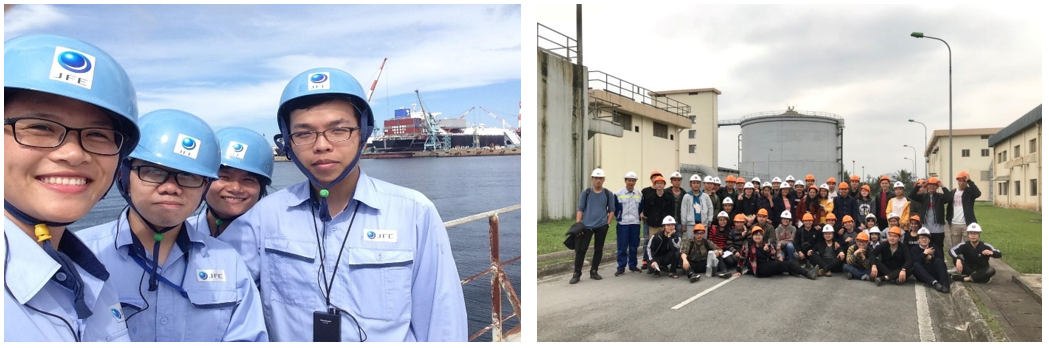
Students go on internships and field trips.
1.2. Training and degree awarding time
- Bachelor's degree (4 years)
- Engineer (equivalent to a master's degree: 5 ÷ 5.5 years)
2. Knowledge and skills acquired after graduation
- Applying core knowledge of natural sciences, engineering and management solutions, and professional skills to solve environmental problems.
- Capable of conceptualizing, designing, implementing, and operating complex projects, technologies, and technical systems in the field of environmental engineering, such as water and wastewater treatment, air pollution control and management, and solid waste management and treatment.
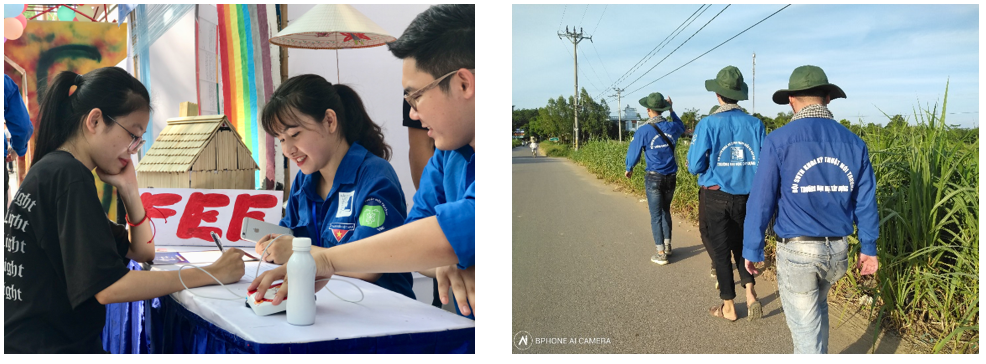
le="text-decoration-style:initial"> Participate in volunteer activities, donate blood
- Possesses strong personal, professional, communication, and teamwork skills, foreign language proficiency, and the ability to write and communicate professionally; has the capacity for creativity and innovative innovation to ensure effective work in a dynamic social context and an interdisciplinary, multicultural, and multinational work environment.
- Possessing relevant economic, political, social, and legal knowledge, and having the ability and willingness to commit to ethical professional conduct and social responsibility, as well as lifelong learning, in order to make an effective contribution to the sustainable development of society and the community.
- Possesses the ability to learn and develop continuously, and the capacity to adapt quickly to career advancement in environmental engineering and related professional fields.
3. Scholarship and academic support opportunities
- The Environmental Engineering Faculty's scholarship fund is for students who achieve excellent academic results and participate actively in extracurricular activities, as well as students who overcome difficulties.
- Scholarship funds from partner businesses and companies: Phu Dien Company, Daikin Company, Panasonic Vietnam, Inno Company, Minh Hung Plastic Company
- Student exchange programs with international universities with full scholarships (2 weeks, 1 month, 6 months, or 1 year): Erasmus+ program with universities in Europe (EU), Sakura program (Japan), summer schools.
- Opportunities for vocational skills training internships at design, construction, and business consulting companies. h, international development organizations and agencies in the field of environmental engineering and management.

Participate in performing arts events at the Faculty, University, etc.
4. Job opportunities
- After graduation, students majoring in Environmental Engineering will play important roles in fields such as planning, design consulting, operation, and management of infrastructure projects for waste collection, treatment, and environmental protection in government agencies, private enterprises, research institutes, and universities.
- It is possible to start and develop businesses in the field of environmental infrastructure, promoting innovation and the application of new technologies in line with the socio-economic trends and context of the country.
- Graduates can become experts and leaders in government agencies, businesses, research institutes, training institutions, and professional associations in the field of environmental infrastructure.
5. Opportunities for postgraduate studies
With a solid foundation of specialized knowledge, graduates can continue their studies to pursue research and teaching careers in related fields. They can work in fields requiring advanced knowledge of environmental engineering or pursue postgraduate studies such as master's programs in Environmental Engineering, Water Supply and Drainage Engineering, Environmental Management, and Urban Management at the University of Civil Engineering or at other universities domestically and internationally.
ial"> 6. Contact: Department of Environmental Engineering
Address: Room 316, Building A1 - University of Civil Engineering
Phone: (024) 3869 1830
Email: moitruong@nuce.edu.vn
Fan Page: https://www.facebook.com/moitruongnuce
Or contact directly: Assoc. Prof. Dr. Nguyen Duc Luong
Deputy Head of the Department of Environmental Engineering
Mobile phone: 0986 071 182
Source: University of Civil Engineering Admissions

 /
/


 16/07/2025
 .png)