With the aim of enhancing the innovative capacity of young people to find solutions to environmental problems, Panda Lab collaborated with Hanoi University of Civil Engineering to organize a workshop: "Enhancing innovative capacity to combat plastic waste".
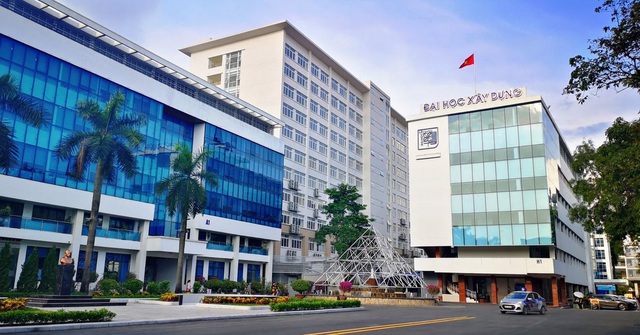
Hanoi University of Civil Engineering campus
The workshop, held over five consecutive days, aimed to introduce and train students on innovative solutions to address waste and plastic pollution issues in the ocean. The workshop's content focused on Design Thinking methodology, delivered by innovation experts from Panda Lab, WWF, and lecturers from the Faculty of Environmental Engineering, Hanoi University of Civil Engineering.
Design thinking is one of the methods for creating solutions to problems. This method places people at the center, helping to create better products or provide more useful solutions with the overarching philosophy of serving people. It is guided by experts through the steps of the Design Thinking process, which include: Empathize - Define problem - Ideate - Prototype - Test . Young people are encouraged to explore the needs of their target audience, propose solutions, and assess feasibility, thereby developing solutions to address waste and plastic waste problems that are suitable for their target groups.
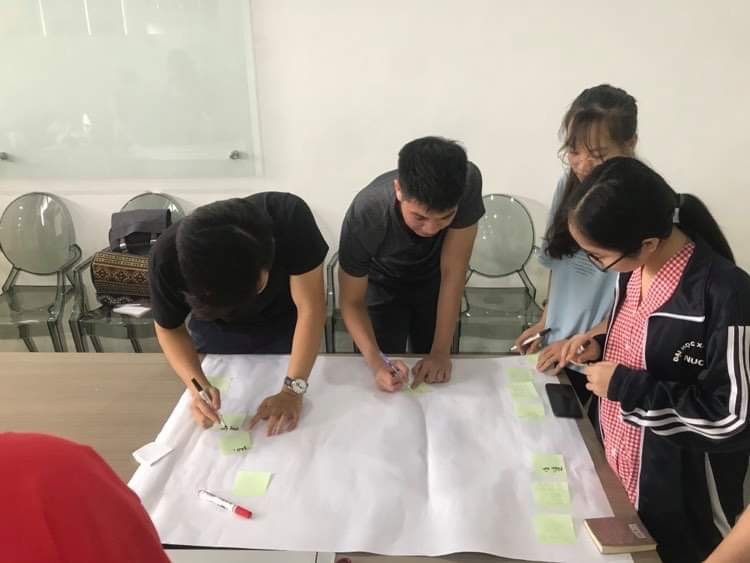
Students practice creating innovative solutions related to plastic waste management.
The theme of this workshop is plastic waste and its impact on the environment. Every year, up to 300 million tons of plastic waste are released into the environment, and more than half of that is single-use plastic products. Although they only provide convenience for a few minutes, plastic bags, cups, straws, etc., take 200 to 500 years to decompose and continue to exist in the environment as microplastics. Therefore, the task for the student groups participating in the workshop will be to apply the TKTD method to develop products and solutions to address the problems of plastic waste.
The workshop was conducted by instructors using an experiential learning method, with participating students learning both theory and practice over five consecutive days. Students were guided through a four-step model: Deeply understanding the problem and surrounding needs, identifying the difficulties or underlying motivations of the target audience; Identifying the core of the problem and generating creative ideas; Designing a prototype and visualizing it with product models; and Finally, testing the product, receiving feedback, and refining it.
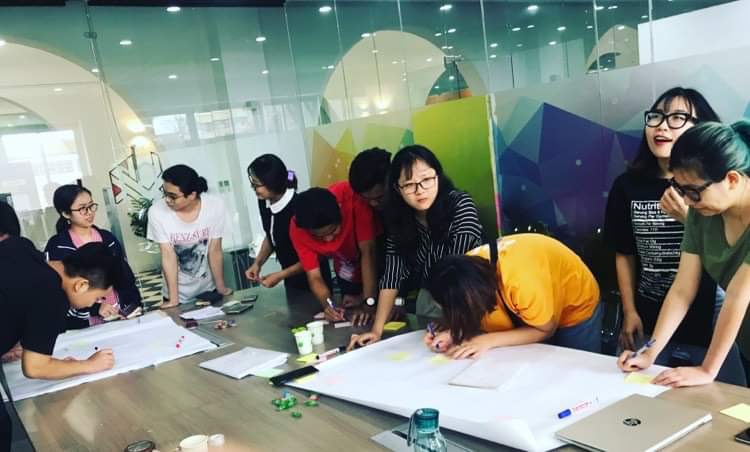
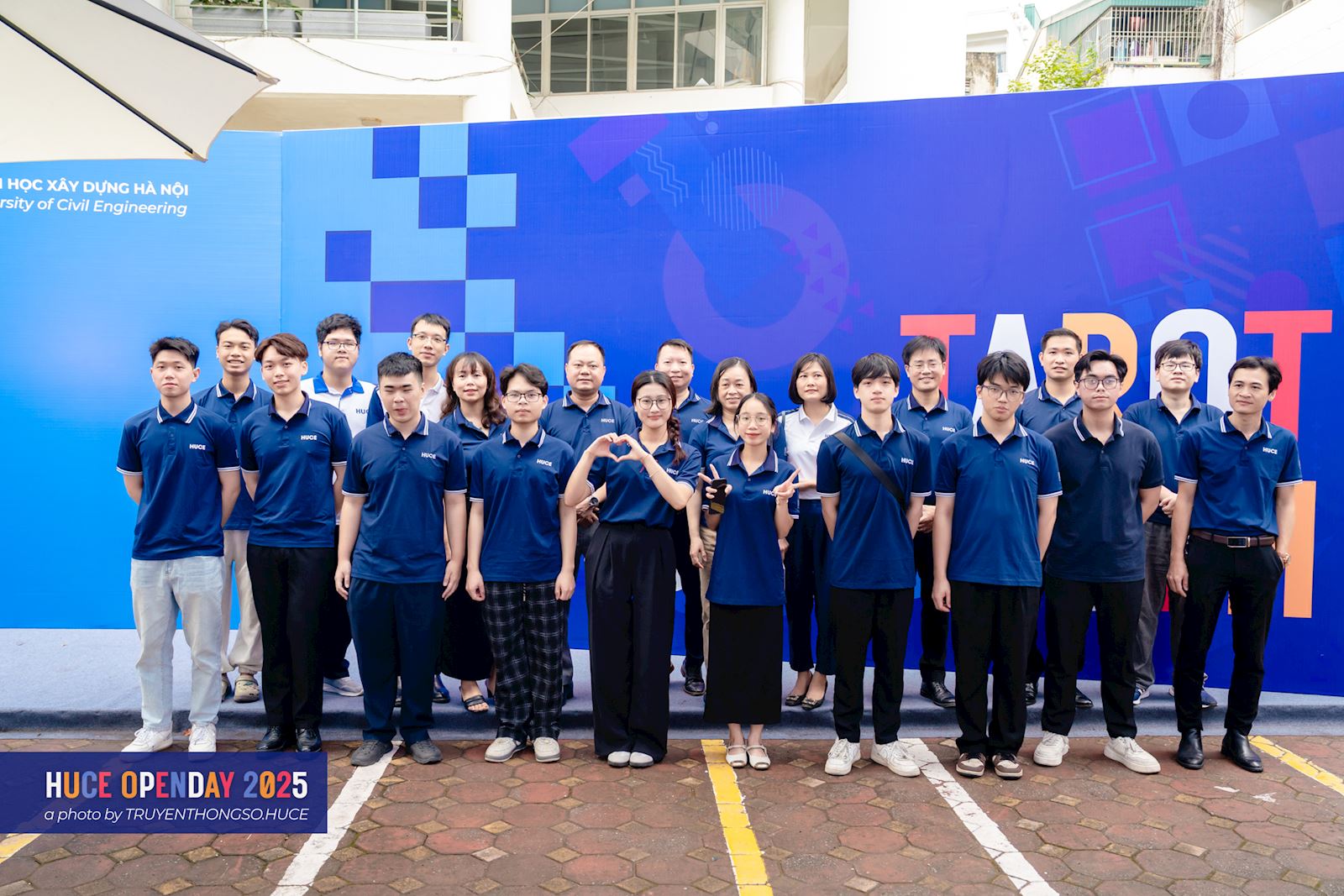
Group of students attending the Workshop
The workshop helped students grasp the methodology of design, innovation, and gain specialized knowledge about the environment, especially waste and plastic waste. In addition, students developed teamwork skills, communication skills, design skills, and skills in implementation and testing throughout the process of creating the product together. The students were truly enthusiastic throughout the process, working together, even staying up late to solve problems, resolve conflicts, and support each other to create a truly collaborative product.
At the end of the workshop, several ideas were highly appreciated for their applicability and received positive feedback from users, such as the "Water Surface Cleaning Machine Model" with a battery-powered motor and a device for scooping up trash from the surface of ponds and lakes; the "Plastic Waste Catching Application" designed for smartphones to help users raise awareness about plastic waste and contribute to plastic waste collection and recycling, etc. These ideas and product models demonstrate the creativity, dynamism, and eagerness to learn of the students from the Environmental Engineering Faculty - Hanoi University of Civil Engineering.
The workshop's results also showed that innovation and entrepreneurial skills are extremely important for 21st-century students. These skills help students easily find suitable approaches to understand customers and develop solutions, creating good products to address real-world problems in the future. This is also what businesses expect from their employees and serves as a foundation for students to have the competence and ambition to start and develop businesses.
The Environmental Engineering program, part of the Faculty of Environmental Engineering at Hanoi University of Civil Engineering, is built using the CDIO approach. The Faculty of Environmental Engineering plans to develop a Fabrication Laboratory (FabLab) to train students in innovation, entrepreneurship, and other essential professional skills. A project to enhance innovation capacity to combat plastic waste with WWF, as well as other science and technology projects, are part of the Environmental Engineering curriculum and serve as pilot projects. The Fabrication Laboratory (FabLab) model is used in capacity-building training for students in the field.
Contact information:
Office of the Faculty of Computer Science: Room 316 - Building A1
Hanoi University of Civil Engineering, 55 Giai Phong Street, Hanoi
Mobile phone: 098 6071 182 Landline: (024) 3869 1830
Facebook: https://www.facebook.com/moitruongnuce
Faculty of Computer Science Communications Team
Source: Truong Thinh (dantri.com.vn)

 /
/


 16/07/2025
 .png)