Project title: “Design of a water supply system for Ninh Binh City and application of BIM in designing a part of the drainage system for the urban area.”
A student from the Faculty of Environmental Engineering made breakthroughs in presenting a part of their graduation project during the July 2021 graduation project defense. Not only did they carry out preliminary and technical designs for water supply system structures, but they also applied modern technology, specifically Building Information Modeling (BIM), to model the drainage system. This resulted in a more vivid and realistic model, facilitating conflict detection, collision handling between structures, and easier statistical analysis and cost estimation. The software used was Revit 2020, Infraworks 2021, and AR. Their project received an Excellent rating from the entire evaluation committee.
WHAT IS BIM? BIM (Building Information Modeling) is the process of creating and using information models in the design, construction, and operation phases of a building.
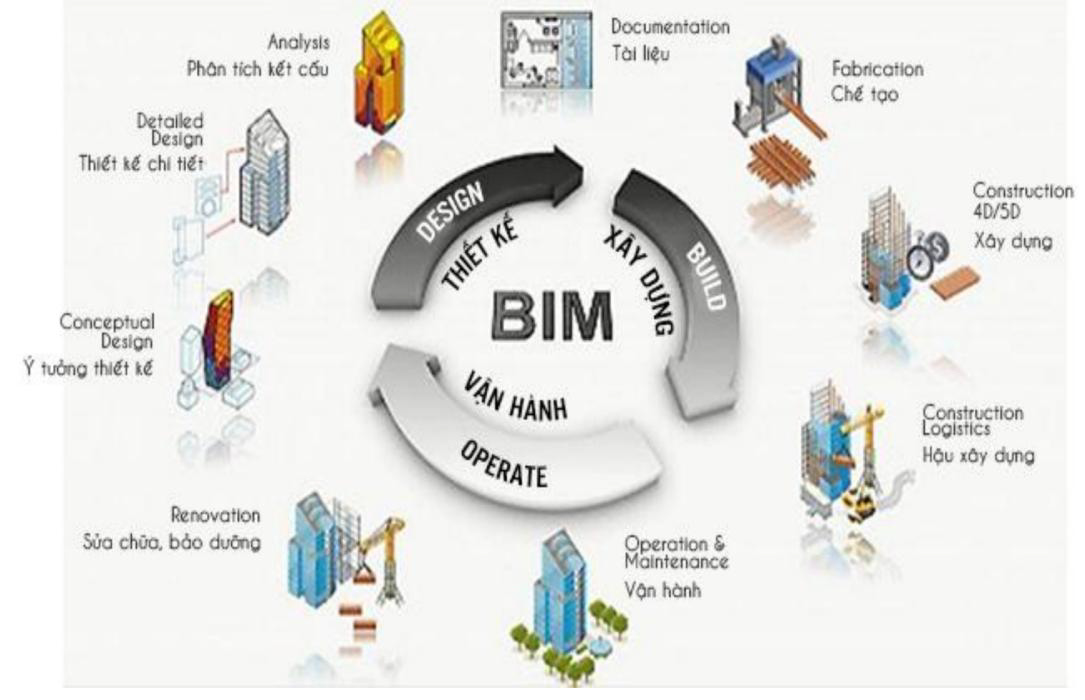
Therefore, BIM cannot be understood simply as software like Revit, Tekla, Navisworks, etc., but rather as a complete process. From the 3D model creation phase to using that model in the design phase (drawing documentation), construction phase (quantity management, method planning, occupational safety, etc.), and building management (maintenance of mechanical, electrical, and plumbing equipment), throughout the entire lifecycle of the project.
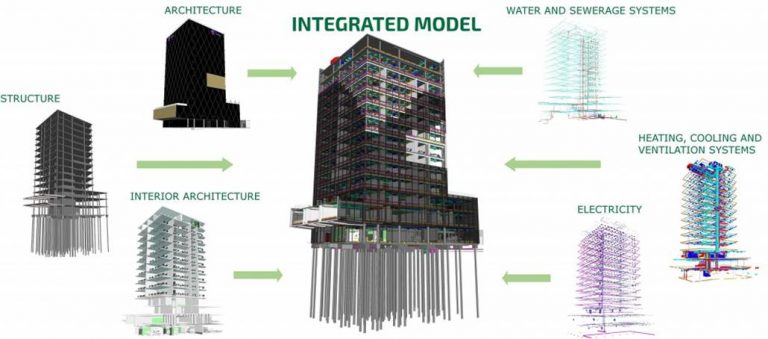
In there:
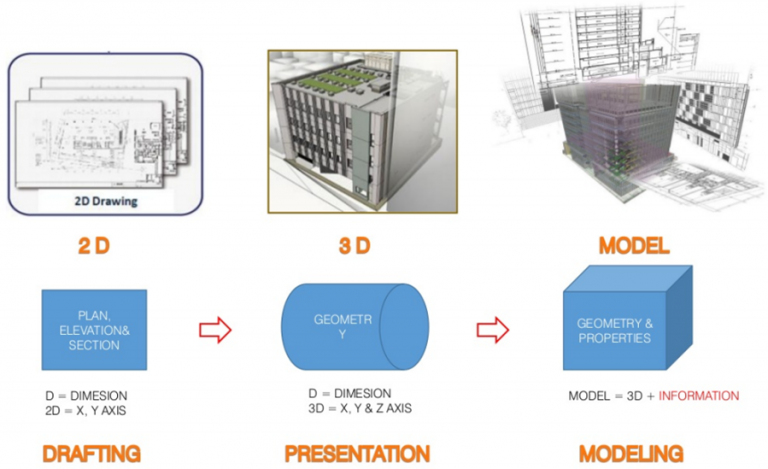
- Geometry: dimensions (length, width, height), distances between building components such as beams, columns, floors, doors, stairs, roofs, etc.
- Non-geometric information: information about product characteristics and specifications, such as the manufacturer of the washbasin, the model, the price, the website, and the product description...
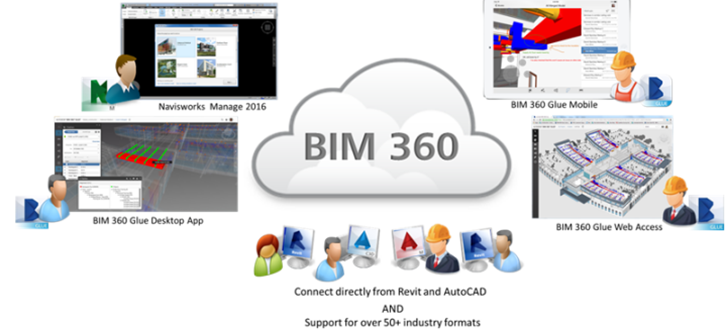
All data related to the building model is stored in a CDE (Common Data Environment ) – a shared data exchange environment. Therefore, all stakeholders involved in construction will use this data throughout the design, construction, and completion phases, enabling better project management (Facility Management). Some popular CDE management tools currently available include BIM 360 and Buzzsaw from Autodesk, or Trimble Connect from Trimble.
Faculty of Computer Science Communications Team
Editor: Gemini Do Lam
Source: Water Engineering Club

 /
/



 16/07/2025
 .png)